

Dietary Carbon Footprint
Exploring the impact of environmental education on the carbon footprint of college students’ diets
Carbon Footprint
Our lab has been focused on: 1) assessing the impact of increased knowledge about food systems and the environment on dietary choices of students. We explore this question by assessing the carbon footprint of student diets before and after both a large class and a small seminar; 2) analyzing how people’s tendency to take a default option (called the “default bias”) can be utilized to increase choices of plant-based meals, and 3) how school food policy changes toward plant-forward diets impacts environmental footprints.



Published Papers

The Carbon Footprint of School Lunch: Moving Toward a Healthy and Sustainable Future for the Next Generation
This study aimed to quantify the carbon footprint of elementary school lunch menus across six major urban school districts in the United States and to simulate the effect of sustainable food policies on carbon emissions reductions while ensuring nutritional requirements remain adequate. We analyzed a total of twenty distinct meals per district selected from a four-week period and calculated their carbon emissions using life cycle assessment data. We then modeled three scenarios to reduce carbon emissions: (1) a reduction in beef meal offerings to one day per month, (2) an introduction of one entirely plant-based day per week, and (3) a combination of scenarios 1 and 2. Our findings revealed that beef-containing meals had the highest carbon emissions, while plant-based meals had the lowest. Implementing the one monthly beef meal scenario led to an average savings of 34% in emissions, while the plant-based day scenario led to a 32% reduction in emissions. Combining both policies resulted in an average reduction of 43% in emissions. Importantly, our nutritional analysis demonstrated that implementing these sustainable food policies resulted in meals with statistically similar macronutrient and micronutrient profiles and contributed to increased dietary fiber intake. These results highlight the potential environmental and health benefits of adopting sustainable nutrition policies in elementary schools.
Plant-based default nudges effectively increase the sustainability of catered meals on college campuses: Three randomized controlled trials
Literature suggests limiting consumption of animal products
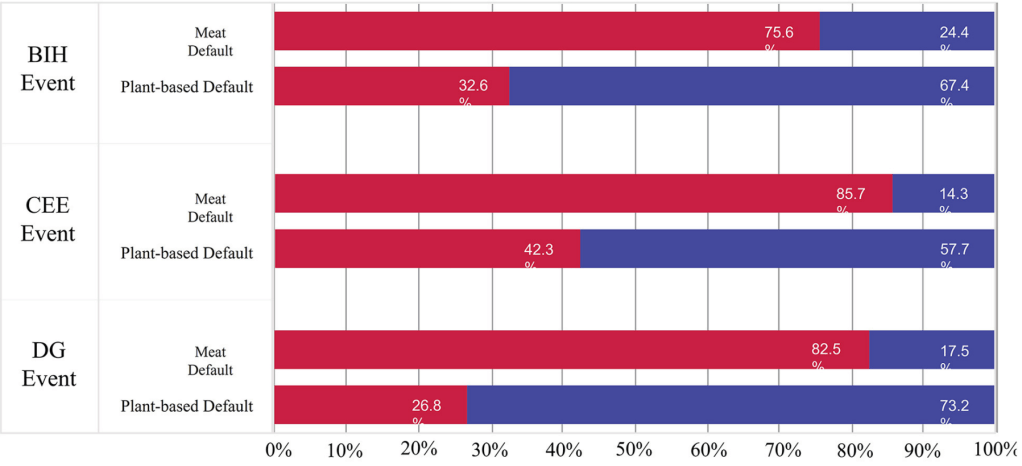
is key to reducing emissions and adverse planetary impacts. However, influencing dietary behavior to achieve planetary health targets remains a formidable problem. Three randomized control trials conducted at university campus events showed that people were 3.5 times more likely to choose plant based meals if they were offered at the default. These interventions can reduce planetary impact while maintaining participant choice.
Impact of a College Course on the Sustainability of Student Diets in Terms of the Planetary Boundaries for Climate Change and Land, Water, Nitrogen and Phosphorus Use
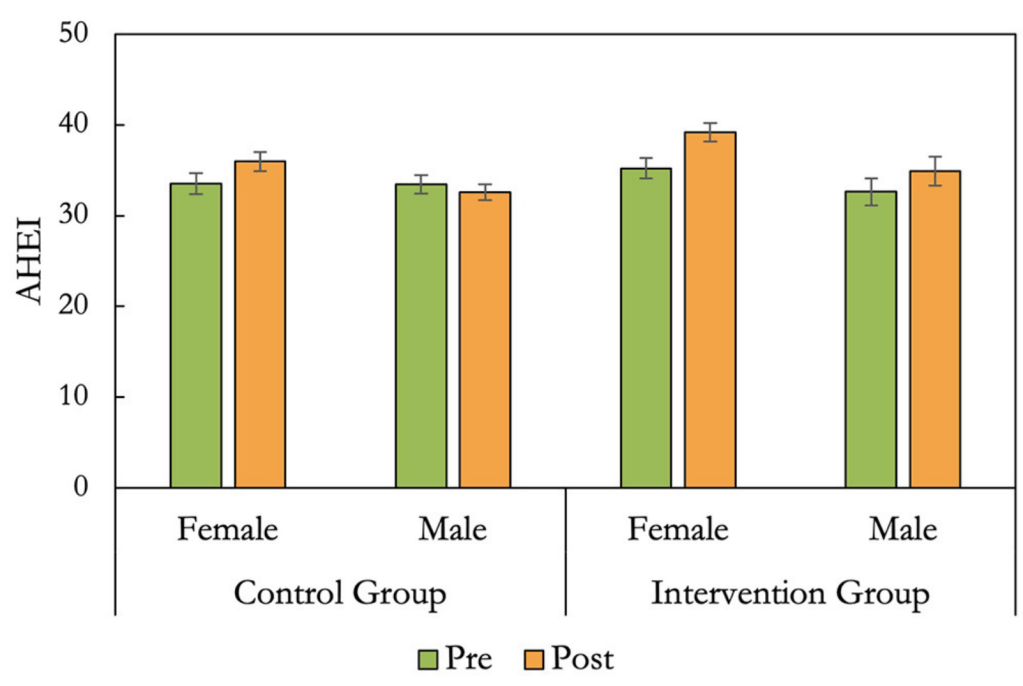
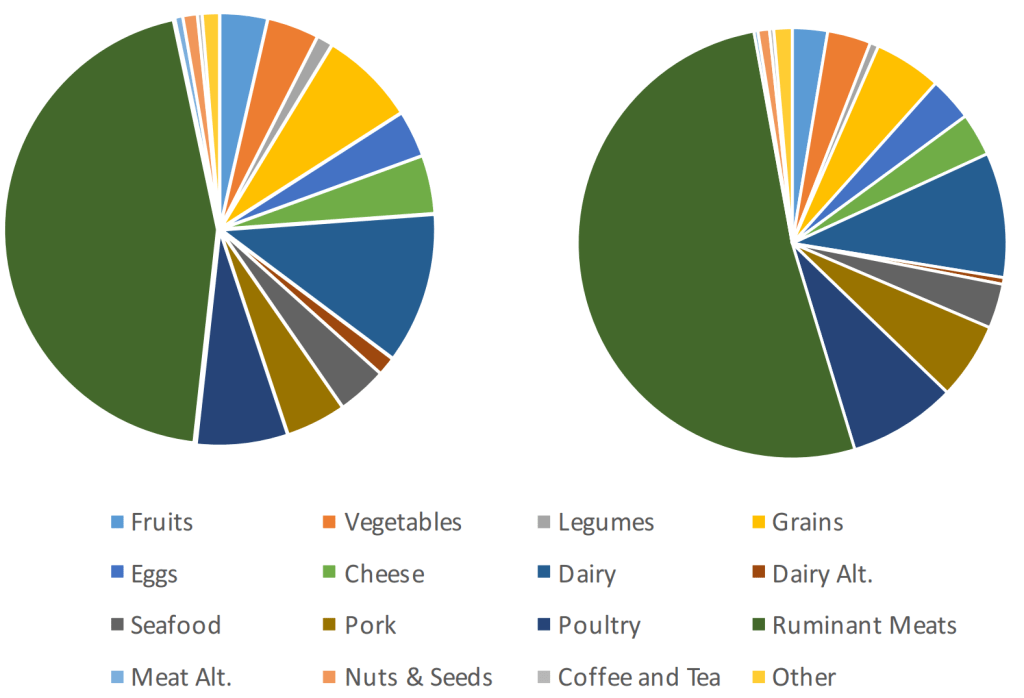
The goal of this study was to evaluate the impact of a two-quarter freshman course series entitled “Food: A Lens for Environment and Sustainability” (Food cluster) on the carbon footprint of food choices by college freshmen attending a large public university in California. Students enrolled in the course completed a baseline questionnaire about their diets in early fall quarter and then again at follow-up, about 6 months later at the end of the winter quarter. Extrapolated across the entire US population, the difference in dietary carbon footprint observed between the Food cluster and control group would amount to 33% of the reduction required for the 2013 President’s Climate Action Plan (2013).
Reduction of the carbon footprint of college freshman diets after a food-based environmental science course
Literature suggests limiting consumption of animal products
is key to reducing emissions and adverse planetary impacts. However, influencing dietary behavior to achieve planetary health targets remains a formidable problem. We investigated the effect of changing the default meal option at catered events–from meat to plant-based–on participants’ meal choices. Results demonstrated plant-based default menu options are effective, providing a low-effort, high-impact way to decrease consumption of animal products in catered events. These interventions can reduce planetary impact while maintaining participant choice.
 JAYLab UCLA