
Community Engagement
Our lab works with community partners to maximize our impact
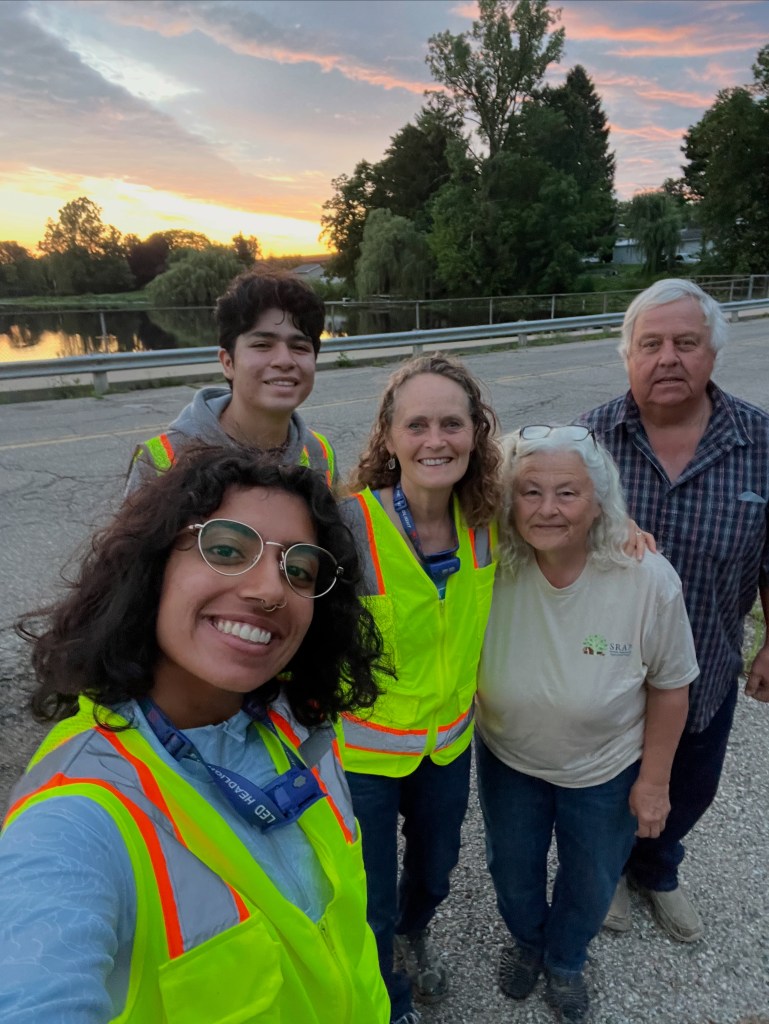
In partnership with Farm Sanctuary and Socially Responsible Agriculture Project, we have been focused on air and water pollution stemming from concentrated animal feeding operations (CAFOs). We travel to communities that are experiencing pollution burdens from CAFOs to collect samples for processing back in lab. We measure typical pollutants like nutrients and bacteria that stem from fecal matter, but we also use DNA-based techniques to look at markers of specific types of animal fecal pollution, certain pathogens, and antibiotic resistance genes (Sanchez et al. 2016). We are especially focused on the development of accessible methods for environmental antimicrobial resistance assessment.
For our recent collaborative projects with Socially Responsible Agriculture Project in Michigan (near facilities with dairy cows and pigs) and Wisconsin (near megadairies), we observed high levels of multidrug resistance in surface waters near factory farms compared to unimpacted sites (Chowdhry et al. 2025). Notably, our results indicated that the level of multidrug resistance could be predicted using a simple kit based method, and we are interested in testing this further so that this more accessible method can be used by community groups to monitor pollution in their communities stemming from CAFOs.
We actively seek ways that our work can be used to influence policy. For example, the current permit CAFO General Permit in Michigan is currently being contested, and the Michigan Department of Environment, Great Lakes, and Energy (EGLE) held a hearing inviting public comment on August 8, 2025. Our recently published Michigan study was submitted as written comments in the hearing, and we provided oral testimony about our documentation of multiresistant bacteria in surface waters near CAFOs.
We are just beginning a new partnership with Center for Race, Poverty, and the Environment to investigate pollution from CAFOs and health impacts on the nearby communities. For this project, we will combine environmental assessment of pollution, health perception surveys of community members, and tests of adverse health effects including lung impairment in residents.
Our vision for this arm of our work is to serve more communities and continue to develop accessible methods to help residents oppose CAFOs in their areas.
 JAYLab UCLA